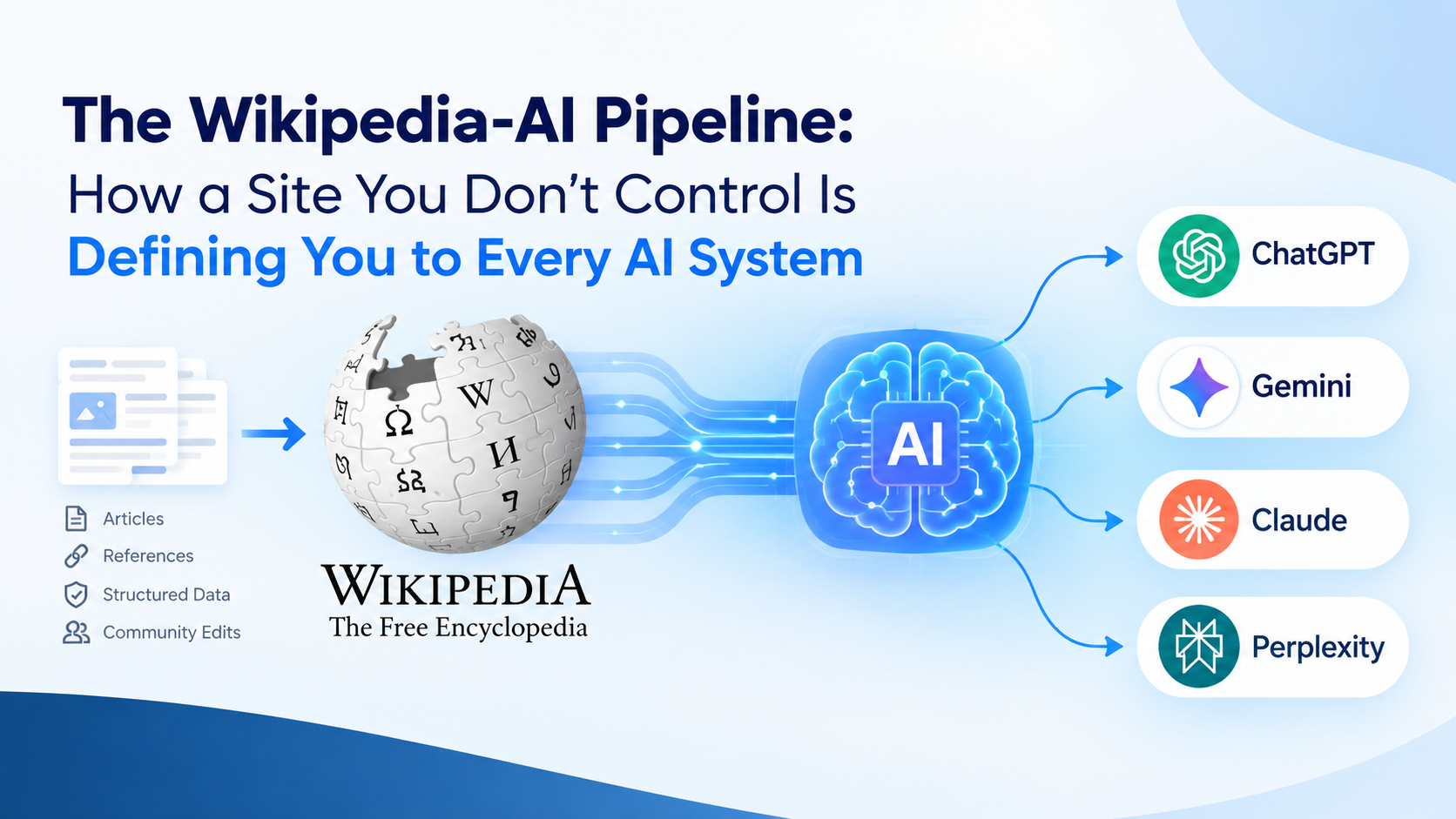
Ask ChatGPT to describe your business. It might quote a sentence you’ve never written. That sentence probably didn’t come from your website or your social media. In many cases, it traces back to a single source most business owners never think about: Wikipedia. Wikipedia sits at the center of something we call the… Continue reading The Wikipedia-AI Pipeline: How a Site You Don’t Control Is Defining You to Every AI System
Read More
Your brand might be invisible right now, and you would never know it from your analytics.
Search Console shows your rankings. Your rank tracker shows your keywords. Your traffic dashboard shows steady visits from Google. Everything looks fine. But none of these tools tell you what happens when someone asks ChatGPT, Perplexity, Gemini, or Claude about your industry. None of them tell you whether your brand gets mentioned, recommended, or quietly skipped.
This is multi-model visibility, and it is the SEO problem almost nobody talks about yet.
What Multi-Model Visibility Actually Means
Multi-model visibility is simple to define but hard to grasp at first. It means how visible your brand is across every AI model that people use to search, research, and get recommendations, not just Google.
For fifteen years, “search visibility” meant one thing: where you ranked on Google. One algorithm. One set of rules. One dashboard to check.
That world does not exist anymore. Today, people ask questions to ChatGPT. They research purchases on Perplexity. They get recommendations from Gemini inside their Google searches. They ask Claude to compare options. Each of these tools pulls information differently, weighs sources differently, and decides what to mention differently.
Your brand can rank on page one of Google and still be completely absent from every one of these conversations. That gap is multi-model visibility, and right now, almost no brand tracks it.
Why Every Brand Has This Problem
You might assume this only affects small businesses without strong SEO. It does not. Large, well-optimized brands have this problem too, often without realizing it.
Here is why. Search engines and AI models do not pull from the same signals. Google has spent two decades building a ranking system based on links, keywords, site structure, and user behavior. AI language models were trained differently. They learned from massive amounts of text, and now they generate answers, sometimes citing sources and sometimes not.
Consequently, a brand that has mastered traditional SEO can still be a stranger to ChatGPT. A well-optimized ecommerce site might rank in the top three on Google for its main keyword. Meanwhile, when a shopper asks ChatGPT for a recommendation in the same category, that brand’s name might never come up.
This is not a hypothetical risk. Independent research has already found major gaps in how AI models cite and represent even well-known brands. Two brands with similar Google rankings can have wildly different visibility inside AI answers, and neither brand would know it without specifically testing for it.
How AI Models Decide What to Mention
Understanding why this gap exists requires a quick look at how these tools actually work under the hood.
A traditional search engine crawls the web, indexes pages, and ranks them using hundreds of signals. When you search, it hands you a list of links, and you decide which one to click.
An AI model works differently. It generates a written answer, word by word, based on patterns it learned during training and, in some cases, information it retrieves in real time. It is not handing you a list. It is handing you a conclusion.
This distinction matters enormously. A search engine’s job is to help you find sources. An AI model’s job is to give you an answer, and sources are sometimes an afterthought rather than the main event.
Because of this, the criteria for being included in an AI answer are not the same as the criteria for ranking on Google. Being the most linked-to page in your industry helps with search rankings. It does not automatically make an AI model mention you, especially on platforms that rely more on training data than live retrieval.
This is exactly why a brand can dominate a Google search results page and still be missing entirely from a ChatGPT conversation about the same topic.
The Old SEO Model vs. the New Reality
The old model was straightforward. You optimized your site for Google. You built links, wrote keyword-focused content, improved page speed, and fixed technical issues. If you did this well, you ranked. If you ranked, people found you.
That single-channel approach worked because there was only one channel that mattered.
Now, the picture looks completely different. Here is how the landscape has fragmented:
- ChatGPT answers based primarily on its training data, and it rarely cites external sources unless asked directly.
- Perplexity works more like a research assistant, actively pulling from live web sources and citing them in nearly every response.
- Google’s AI Overviews blend traditional search signals with generative summaries, often citing a narrow set of sources at the top of the results page.
- Gemini pulls from Google’s index but generates conversational answers that behave differently from a standard search snippet.
- Claude, when connected to web search, cites sources but leans more conservatively than Perplexity in how often it links out.
Each of these systems has its own logic. Optimizing for one does not guarantee visibility on another. In fact, a technique that helps you get cited on Perplexity might do nothing for your visibility inside ChatGPT’s default answers.
This fragmentation is the core of the multi-model visibility problem. Brands are still measuring an old, single-channel world while operating in a new, five-or-six-channel reality.
A Real Example of How Different the Platforms Are
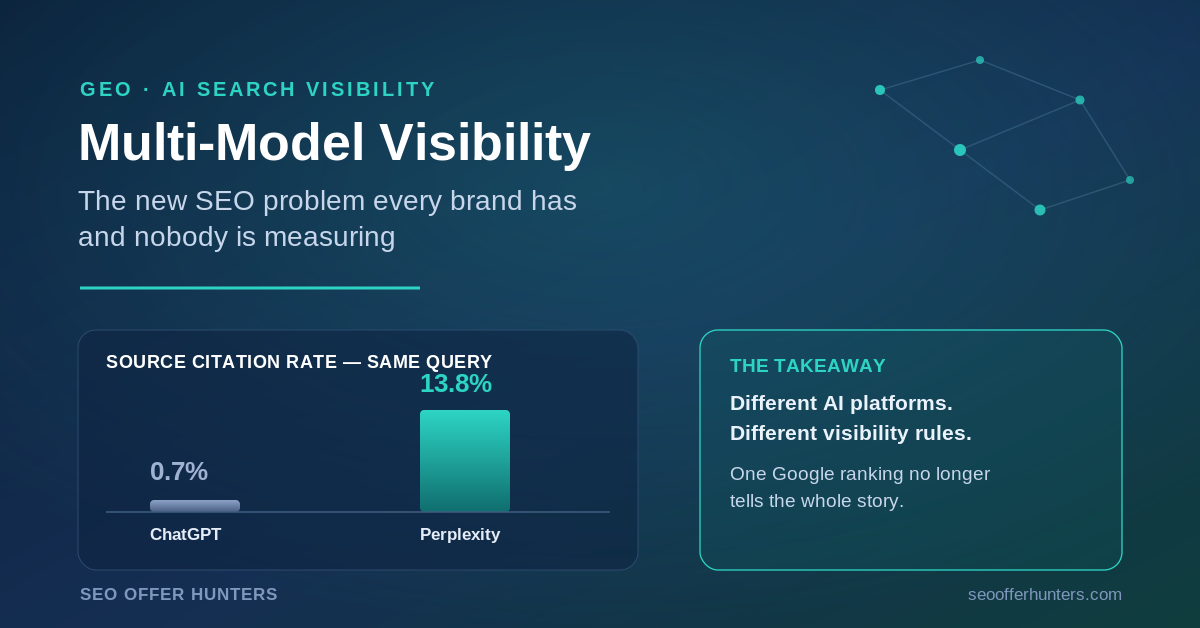
Consider this data point: for the same query, on the same day, ChatGPT cited a source in only 0.7% of relevant responses. Perplexity, on the other hand, cited a source in 13.8% of comparable responses, nearly twenty times more often.
That is not a small gap. That is a completely different set of rules.
If your content strategy assumes that being “AI-friendly” means the same thing across every platform, this single data point should change your mind. A brand built for citation-heavy platforms like Perplexity might invest heavily in structured data, clear sourcing, and quotable statistics. That same brand might see almost none of that effort reflected inside ChatGPT’s answers, because ChatGPT simply does not cite as often, regardless of how citable your content is.
This means visibility strategy has to branch. You cannot build one plan and expect it to work everywhere.
Why Nobody Is Measuring This Yet
If multi-model visibility is such a clear risk, why isn’t every marketing team tracking it already? Three reasons stand out.
First, the tools are new and inconsistent. Rank trackers for Google have existed for two decades and are mature, accurate, and standardized. Tools for tracking AI visibility are still being built, and most brands have not adopted them yet. Many marketing teams do not even know these tools exist.
Second, AI answers are not static. A Google ranking stays relatively stable day to day. An AI-generated answer can change based on subtle differences in how a question is phrased, what the model has learned recently, or even random variation in the model’s output. This makes AI visibility harder to measure with a simple “rank number.”
Third, most marketing teams are still organized around old SEO roles. SEO specialists know how to read Search Console. Few of them have been trained to test brand visibility across five different AI models on a recurring basis. Without a clear owner for this task, it quietly falls through the cracks.
As a result, most brands operate with a blind spot they don’t know they have. They assume that strong Google rankings translate into strong AI visibility. Often, that assumption is wrong.
The Real Cost of Ignoring Multi-Model Visibility
This is not an abstract, future problem. It is already affecting how customers find and choose brands today.
Think about how people research decisions now. Someone shopping for software asks ChatGPT to compare three options before ever visiting a company’s website. Someone planning a trip asks Perplexity to recommend hotels in a specific neighborhood. Someone researching a big purchase asks an AI assistant to summarize reviews and comparisons.
In each of these moments, the AI model makes a recommendation on the user’s behalf. If your brand does not appear in that recommendation, you lose the customer before they ever reach your site. Your Google ranking becomes irrelevant, because the customer never made it to a search results page at all.
This also affects trust in a way traditional SEO never had to consider. When an AI model describes your brand inaccurately, outdated information, wrong pricing, or an incomplete feature list, that inaccurate summary reaches the customer before your own website does. You cannot correct it the way you would update a webpage, because you do not control what the model says. This makes accurate visibility even more urgent than accurate ranking ever was.
This shift also changes what “winning” looks like. Instead of competing for a blue link on page one, brands now compete for a mention inside a paragraph of AI-generated text. That is a fundamentally different competition, and most brands are not even in the race yet.
The cost of ignoring this gap grows every quarter. As more people shift daily search behavior toward AI assistants, the brands invisible to those assistants lose ground quietly, without any alert or dashboard warning them it’s happening.
How to Start Measuring Multi-Model Visibility
The good news is that measuring this gap does not require guesswork. It requires a structured, repeatable process. Here is where to start.
Step 1: Identify the AI Models Your Customers Actually Use
Before measuring anything, figure out where your audience spends time. A B2B software buyer likely uses ChatGPT or Perplexity for research. A general consumer might lean more heavily on Google’s AI Overviews or Gemini, simply because those appear inside a search they were already running.
Not every brand needs to track every model equally. Prioritize the two or three platforms most relevant to your actual customers, then expand from there.
Step 2: Run the Same Set of Test Queries Across Each Platform
Build a list of ten to twenty questions your ideal customer might realistically ask. Include direct brand questions (“What is [Brand] known for?”) and category questions (“What’s the best option for [product category]?”).
Run each question through every AI model on your priority list. Record whether your brand appears, how it’s described, and whether the response includes a link, a citation, or just a passing mention.
Step 3: Track Competitor Visibility Alongside Your Own
Visibility only means something in context. If your brand appears in 20% of relevant AI answers but your top competitor appears in 70%, that gap tells you exactly where you stand in the new landscape.
Repeat this competitor comparison every month or two. AI models update frequently, and visibility can shift faster than traditional search rankings ever did.
Step 4: Separate “Mentioned” From “Recommended”
Not all visibility is equal. An AI model might mention your brand name while recommending a competitor instead. Track the difference between a neutral mention and an actual recommendation, since only the second one reliably drives new customers.
Step 5: Audit Your Content for Each Platform’s Citation Style
Once you understand the gaps, look at your content through each platform’s lens. Perplexity-style platforms reward clear, quotable statistics and well-structured pages. ChatGPT-style platforms reward strong brand association and consistent mentions across the broader web, since it relies more on training data than live citations.
This means the same page might need different structural choices depending on which platform you are optimizing it for.
Building a Real Multi-Model Visibility Strategy
Once you have a baseline, the next step is building a strategy that treats each platform as its own channel, not a single combined effort.
Start with structured, factual content. Every AI model, regardless of its citation habits, favors content that states facts clearly. Avoid vague claims. Include specific numbers, dates, and named entities wherever possible. This gives every model something concrete to pull from, whether it links back to you or not.
Build genuine topical authority. AI models tend to associate brands with topics based on how consistently that brand appears across the web discussing those topics. This means guest content, industry mentions, and consistent messaging across multiple sites all support your AI visibility, not just your own website content.
Format content for extraction. Use clear headings, short paragraphs, and direct answers near the top of each section. AI models pull text in chunks, and clean formatting makes your content easier to lift accurately into a generated answer.
Monitor, don’t guess. Set a recurring schedule, whether monthly or quarterly, to re-run your test queries and track changes. Multi-model visibility is not something you fix once. It shifts as models update, so your measurement needs to be ongoing.
Treat each platform as its own project. Resist the urge to build one generic “AI SEO” plan. A strategy built for Perplexity’s citation-heavy behavior will look different from a strategy built for ChatGPT’s training-data-driven answers. Build separate playbooks, even if they share some underlying content.
Who Should Own This Inside Your Company
One more barrier keeps multi-model visibility unmeasured: nobody has been assigned to own it.
In most companies, SEO sits with a marketing specialist or an outside agency. Brand reputation might sit with a communications team. Product messaging might sit with product marketing. Multi-model visibility touches all three, but it belongs fully to none of them.
Until a company assigns clear ownership, whether that is an existing SEO lead expanding their scope, a dedicated AI visibility function, or an outside partner who specializes in this exact gap, the work simply will not get done. Ambiguity about ownership is one of the quietest reasons brands fall behind.
What Happens If You Wait
Some brands will read this and decide to wait, reasoning that AI search is still early and traditional SEO still drives most of their traffic today. That reasoning made sense two years ago. It makes less sense now.
AI-assisted search behavior grows every quarter, and early movers are establishing citation patterns that become harder to displace over time. Once an AI model consistently associates a topic with a specific set of brands, breaking into that association gets more difficult, not less. Waiting does not preserve your position. It just gives competitors more time to claim the visibility you have not yet measured.
Frequently Asked Questions
What is multi-model visibility in simple terms?
It means how often and how accurately your brand shows up when people ask different AI tools, like ChatGPT, Perplexity, Gemini, and Claude, about your industry, products, or brand name directly.
Is multi-model visibility the same as SEO?
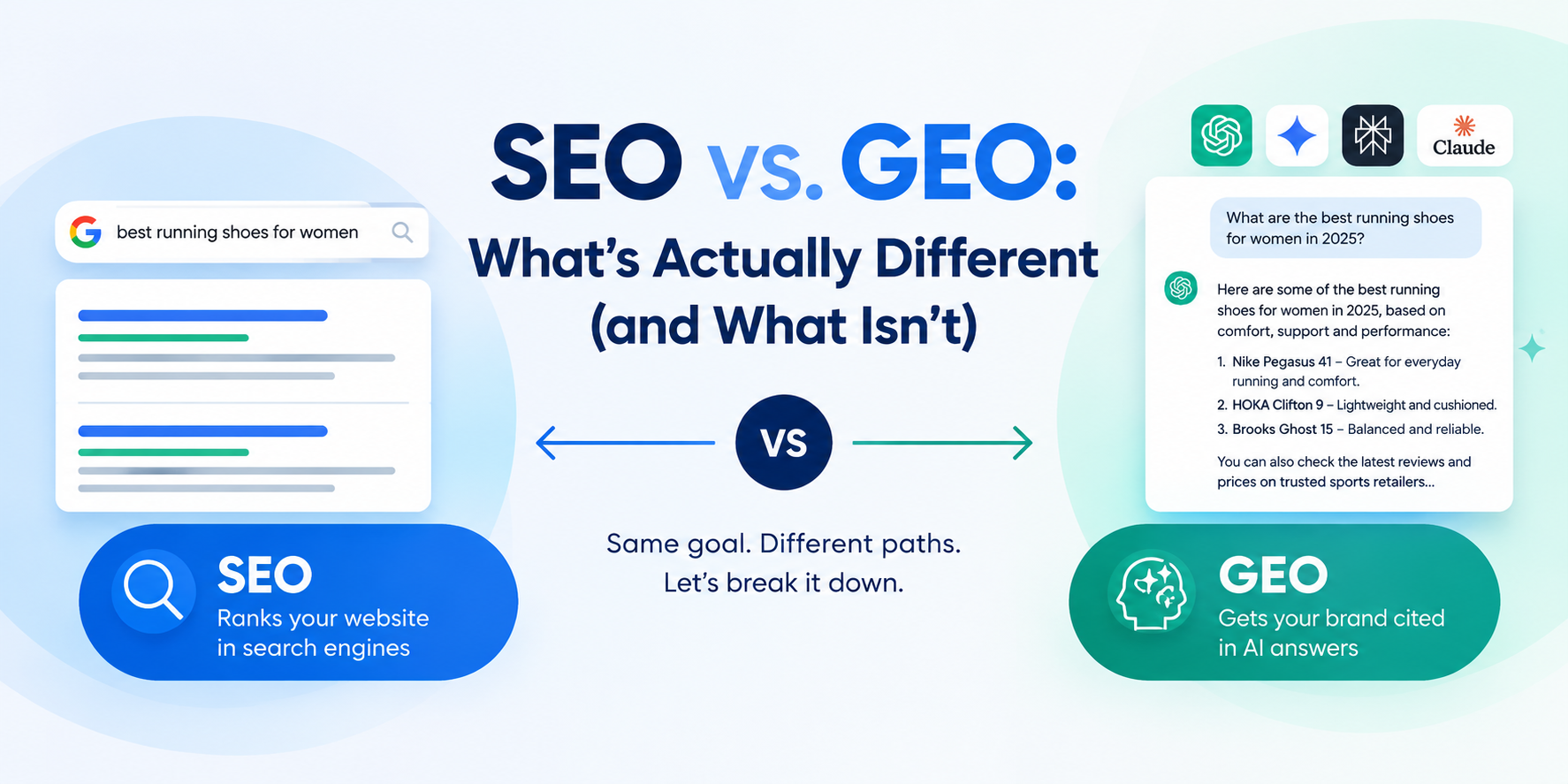
No. Traditional SEO focuses on ranking in search engine results pages. Multi-model visibility focuses on how AI models describe, mention, or recommend your brand inside a generated answer, which follows a different set of rules entirely.
Why do ChatGPT and Perplexity show such different citation rates?
ChatGPT generates most answers from its training data and cites sources less frequently by default. Perplexity is built around live web search and citation, so it references sources far more often for the same type of query.
How often should a brand check its multi-model visibility?
Monthly checks work well for competitive industries. Quarterly checks are a reasonable minimum for slower-moving categories, since AI models update their behavior more often than traditional search algorithms do.
Can a brand improve its visibility across all AI models at once?
Some improvements help broadly, like clear, factual content and strong topical authority. Full optimization usually requires platform-specific adjustments, since each model weighs sources and structures answers differently.
The Bottom Line
Multi-model visibility is not a future problem. It is a current, measurable gap that most brands have not looked at yet. Your Google rankings tell you one part of the story. They no longer tell you the whole story.
The brands that start measuring this now, even with a simple monthly test, will understand their position long before their competitors do. The ones that wait will keep looking at dashboards that show everything is fine, right up until they realize their customers stopped finding them somewhere they never thought to check.
Published by AI SEO Offer Hunters | seoofferhunters.com | GEO & AI Search Visibility Specialists